


5 Common Mistakes New Businesses Make — And How to Avoid Them
SEO Title: 5 Common Mistakes New Businesses Make and How to Avoid Them
Meta Description: Starting a new business? Discover 5 common mistakes new businesses make, from poor planning and budgeting to weak online presence, and learn how to avoid them.
Suggested URL Slug: /5-mistakes-new-businesses-make/
Primary Keyword: mistakes new businesses make
Secondary Keywords:
- common business mistake
- new business mistakes
- small business mistakes
- how to start a successful business
- business growth tips
- small business marketing
- online presence for business
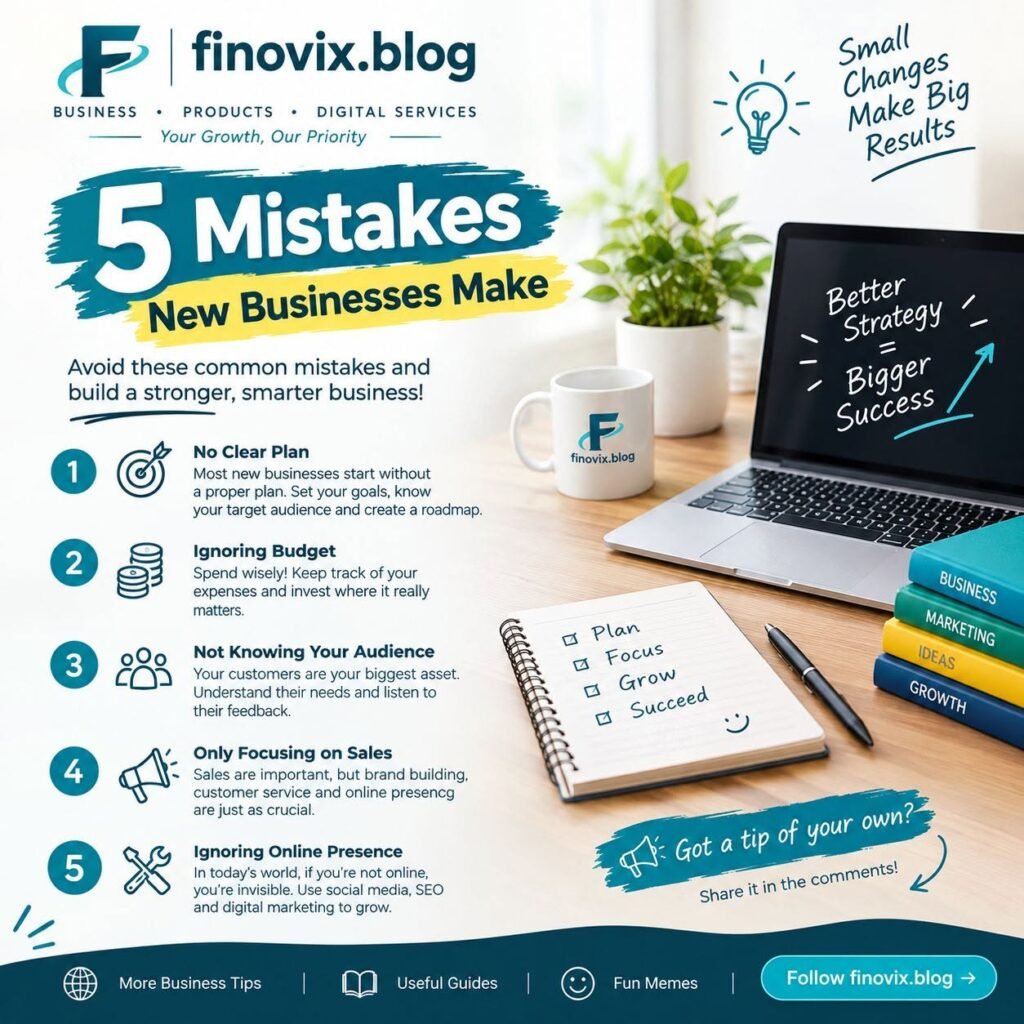
5 Common Mistakes New Businesses Make — And How to Avoid Them
Starting a new business can be exciting. You have an idea, you are ready to work hard, and you may already be imagining your first customers and your business growing.
But here is the reality: having a great business idea is only the beginning.
Many new businesses fail to grow not because their product or service is bad, but because they make avoidable mistakes in planning, budgeting, marketing, customer understanding, or online presence.
If you are launching a startup, small business, online store, freelance service, or local business, knowing these mistakes beforehand can save you time, money, and unnecessary stress.
Let’s look at the five most common mistakes new businesses make—and, more importantly, how you can avoid them.

Starting Without a Clear Business Plan
One of the biggest mistakes new businesses make is starting without a clear plan.
You might think:
“I’ll start first and figure everything out later.”
Unfortunately, this approach can quickly become expensive.
A business needs direction. Before investing your money and time, you should know:
- What exactly are you selling?
- Who is your target customer?
- What problem does your product or service solve?
- Who are your competitors?
- How will customers find you?
- How much will you charge?
- What are your short-term and long-term goals?
A business plan doesn’t have to be a 50-page document. Even a simple one-page plan can give you a clear roadmap.
How to avoid this mistake
Start with a basic business roadmap.
Define your:
Goal → Target Audience → Product/Service → Pricing → Marketing Strategy → Budget → Growth Plan
For example, instead of saying:
“I want to sell clothes online.”
Make it more specific:
“I want to sell affordable modest fashion for university students through Instagram and an online store.”
The second idea gives you a much clearer direction.
Ignoring Your Business Budget
Another common mistake is spending money without tracking where it goes.
New business owners often spend heavily on logos, websites, packaging, advertisements, equipment, or inventory before understanding their actual financial position.
The problem isn’t spending money.
The problem is spending without a strategy.
Create a simple business budget
Separate your expenses into categories such as:
| Expense | Example |
|---|---|
| Business Setup | Registration, basic tools |
| Product/Inventory | Stock and materials |
| Marketing | Ads, content, promotions |
| Technology | Website, software |
| Operations | Delivery, packaging, utilities |
| Emergency Fund | Unexpected expenses |
Keep track of both income and expenses.
Even a small business should know:
Revenue − Expenses = Profit
Don’t confuse sales with profit. A business can generate plenty of sales and still lose money if expenses are too high.
Smart tip
Before spending on something, ask:
“Will this expense help my business generate revenue, improve customer experience, or operate more efficiently?”
If the answer is no, think twice.

Not Understanding Your Target Audience
You cannot effectively sell to everyone.
One of the most important things a new business needs to understand is who its ideal customer is.
For example, imagine you sell skincare products.
Saying:
“My target audience is everyone who uses skincare.”
is too broad.
A better target audience might be:
“Women aged 18–30 who want affordable skincare products and primarily discover brands through Instagram and TikTok.”
Now your marketing becomes much easier.
You know what type of content to create, where to promote your products, and what kind of message is likely to attract customers.
Learn what your customers actually want
Research:
- Their problems
- Their needs
- Their budget
- Their buying habits
- Their preferred platforms
- Their questions
- Their complaints about existing products
- What influences their purchasing decisions
And don’t forget the simplest research method:
Ask your customers.
Customer feedback can tell you things that market research alone may miss.
Remember:
Your customers are not just buyers—they are a source of valuable business information.
Focusing Only on Sales
Of course, sales are important.
Without revenue, a business cannot survive.
But constantly thinking about:
“How can I sell more?”
while ignoring everything else can hurt your business in the long run.
Customers also care about:
- Brand reputation
- Product quality
- Customer service
- Communication
- Trust
- Delivery experience
- After-sales support
- Overall experience
Imagine two businesses selling almost identical products.
Business A focuses only on getting the sale.
Business B responds quickly, provides useful information, delivers on time, solves problems professionally, and stays connected with customers.
Which business is more likely to receive repeat customers?
Usually, Business B.
Build relationships, not just transactions
Instead of creating every social media post around:
“BUY NOW!”
create content that also:
- Educates
- Answers questions
- Solves problems
- Shows your expertise
- Demonstrates your product
- Shares customer experiences
- Builds trust
A successful brand doesn’t just sell a product. It gives people a reason to choose it.
Of course, sales are important.
Without revenue, a business cannot survive.
But constantly thinking about:
“How can I sell more?”
while ignoring everything else can hurt your business in the long run.
Customers also care about:
- Brand reputation
- Product quality
- Customer service
- Communication
- Trust
- Delivery experience
- After-sales support
- Overall experience
Imagine two businesses selling almost identical products.
Business A focuses only on getting the sale.
Business B responds quickly, provides useful information, delivers on time, solves problems professionally, and stays connected with customers.
Which business is more likely to receive repeat customers?
Usually, Business B.
Build relationships, not just transactions
Instead of creating every social media post around:
“BUY NOW!”
create content that also:
- Educates
- Answers questions
- Solves problems
- Shows your expertise
- Demonstrates your product
- Shares customer experiences
- Builds trust
A successful brand doesn’t just sell a product. It gives people a reason to choo
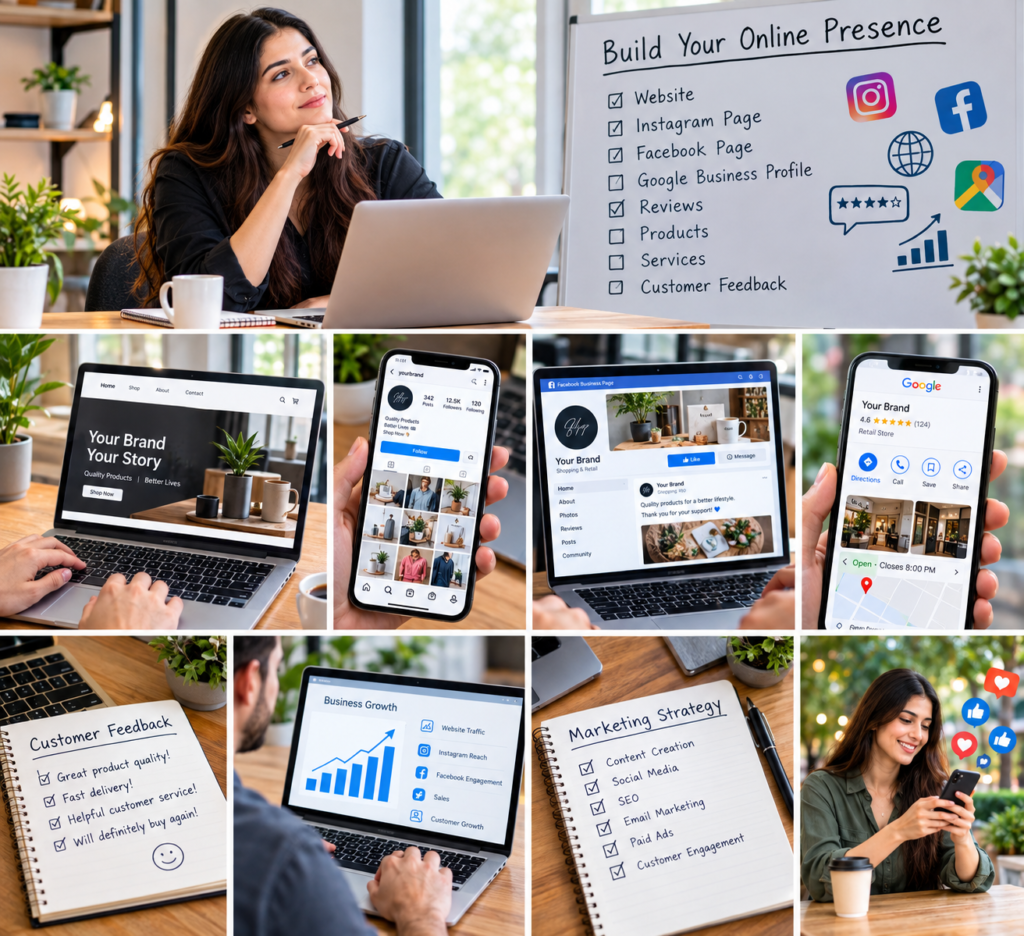
Ignoring Your Online Presence
This is one of the biggest mistakes businesses can make today.
People search online before making decisions.
They may search for your:
- Website
- Instagram page
- Facebook page
- Google Business Profile
- Reviews
- Products
- Services
- Customer feedback
If your business doesn’t have a strong online presence, potential customers may struggle to find or trust you.
And here’s an important point:
Being online doesn’t simply mean having an Instagram account.
Your online presence should be consistent and useful.
Build a strong digital presence
Depending on your business, focus on:
🌐 Website
Your website can explain who you are, what you offer, your pricing or services, and how customers can contact you.
📱 Social Media
Choose platforms where your target audience actually spends time.
Don’t feel pressured to be active on every platform.
🔎 SEO
Search engine optimization can help people discover your website when they search for products, services, or solutions related to your business.
⭐ Reviews
Positive customer reviews can build trust and influence purchasing decisions.
📊 Content Marketing
Create useful content instead of constantly promoting your product.
For example, a digital marketing agency could publish:
“5 Social Media Mistakes Small Businesses Should Avoid.”
This attracts people who are already interested in digital marketing.
How to Avoid These 5 Business Mistakes
Here’s a simple checklist you can use before launching or growing your business:
✅ Have a clear plan
Know what you want to achieve and how you plan to get there.
✅ Track your money
Monitor income, expenses, profit, and cash flow.
✅ Know your audience
Understand who your ideal customers are and what they actually need.
✅ Build relationships
Don’t focus exclusively on making a sale. Create a positive customer experience.
✅ Invest in your online presence
Make it easy for potential customers to discover, understand, and trust your business.
Bonus: 7 Questions Every New Business Owner Should Ask
Before making an important business decision, ask yourself:
1. Who exactly is my customer?
2. What problem am I solving for them?
3. Why should they choose my business instead of a competitor?
4. How much does it cost me to operate?
5. How will customers discover my business?
6. What can I improve based on customer feedback?
7. What is my next realistic growth goal?
If you can answer these questions clearly, you’re already thinking more strategically than many new business owners.
Frequently Asked Questions (FAQs)
What is the biggest mistake new businesses make?
One of the biggest mistakes is starting without a clear plan. Without defined goals, a target audience, budget, and marketing strategy, it becomes difficult to make consistent business decisions.
Why do small businesses fail?
There isn’t one single reason. Common problems include poor financial management, lack of customer research, weak marketing, poor planning, insufficient demand, and failure to adapt to customer needs.
How can I make my new business successful?
Start with a clear business plan, understand your target audience, control your expenses, provide excellent customer service, and build a strong online presence.
How important is digital marketing for a new business?
Digital marketing can help a new business reach potential customers, build brand awareness, generate leads, and communicate with its audience. The right strategy depends on the business and its target market.
Does every small business need a website?
Not necessarily on day one, but having a professional website can make it easier for customers to learn about your business, find your services, contact you, and build trust.
How much should a new business spend on marketing?
There is no universal amount. Your marketing budget should depend on your revenue, business model, goals, audience, and available resources. Start with a manageable budget and measure results before increasing spending.
Final Thoughts
Starting a business is exciting—but building a sustainable business requires more than a good idea.
You need a plan.
You need financial discipline.
You need to understand your customers.
You need to build relationships.
And in today’s digital world, you need to be discoverable online.
The good news?
You don’t have to be perfect from day one.
Start small, measure what works, listen to your customers, and improve continuously.
Because sometimes, small changes can make big results.
💬 What business mistake do you think new entrepreneurs make most often?
Share your experience in the comments—and don’t forget to follow finovix.blog for more business, product, and digital-service tips.